Focused arrival windows
Useful updates and clear arrival timing.

Leak Detection in Nashua in French Hill means finding the source before it wrecks your floors, foundation, or water bill. We work the dense blocks around St. Patrick Church and French Hill Elementary School every week, using thermal imaging cameras and acoustic listening devices on the older multi-family homes and aging water lines that define this neighborhood. Same-day service, upfront pricing, and a written report of what we found.
Useful updates and clear arrival timing.
Review the approach and price before deciding.
Equipped vehicles and respectful cleanup.
Neighbors serving neighbors with follow-through.
Leak Detection in Nashua in French Hill is the service that finds hidden water, gas, and sewer leaks inside the dense urban blocks of the French Hill District before they cause structural damage or spike your utility bill. Nashua LeakDetectors has worked this neighborhood since 2010, and the housing stock here tells you why that matters: most of French Hill was built before 1950, and the copper pipe, cast iron drains, and original water lines in these multi-family homes are well past their design life. We use acoustic listening devices, thermal imaging cameras, and tracer gas detectors to pinpoint leaks without tearing up walls or floors. Whether you own a triple-decker on Lake Street or a single-family near Mine Falls Park, we know how these buildings fail and where the water goes when they do.

French Hill's mix of pre-war multi-family homes, small commercial buildings, and older underground infrastructure creates demand for nearly every type of leak detection we offer. If you have been searching for Leak Detection in Nashua in French Hill near me and need someone who knows these buildings, we cover the full range below. Most calls start with a hidden leak or a water bill that jumped, and end with a located, documented, and repaired line.
We handle residential leak detection across the French Hill District, from triple-deckers on Lake Street to single-family homes near Mine Falls Park. Most calls involve hidden pipe leaks behind plaster walls or under finished basements. We use thermal imaging cameras and moisture meters to map the leak before we open anything up, so you pay for a repair, not a demolition.
View service →02French Hill's Central Street Area has small commercial buildings, mixed-use storefronts, and older retail spaces with original supply lines. We run commercial leak detection after hours so your business stays open. Acoustic listening devices and pressure testing gauges isolate the leak without shutting down the whole building. We document everything for your insurance carrier.
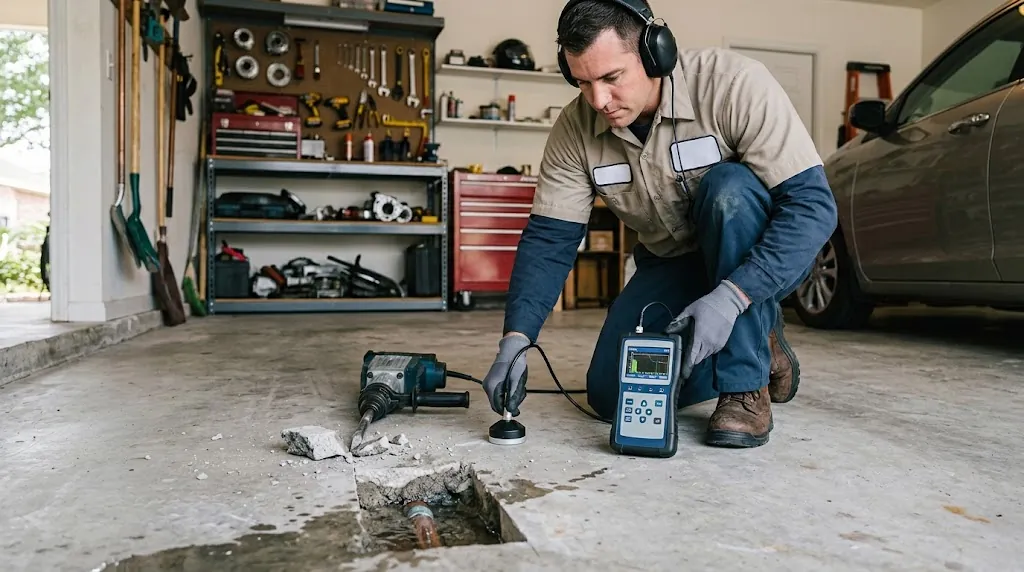
View service →03Slab leaks are common in French Hill's post-war homes with finished basements. Warm spots on the floor, a water bill that climbs every month, and the sound of running water with everything off are the usual signs. We use thermal imaging cameras and acoustic listening devices to pinpoint the break under the slab before we cut concrete.
View service →04A handful of French Hill properties have in-ground pools, and the older ones lose water through cracked return lines and failing light niches. We pressure test the plumbing, dye test the shell, and use acoustic listening to find the leak. Most pool leaks we find in this neighborhood are in the underground lines, not the pool itself.
View service →05Plumbing leak detection in French Hill means working around original copper pipe, partial PEX retrofits, and cast iron drains that have been patched more than once. We trace the leak with ultrasonic leak detectors and pipe inspection cameras, then tell you exactly which section needs repair. No guesswork, no opening three walls to find one leak.
View service →06The water lines running from the main to French Hill homes are old, and many are still original. A water line leak shows up as a soft spot in the yard, a spinning meter, or a bill that doubles. We use acoustic listening and pressure testing to find the break underground, then mark the excavation point so the repair is a single dig.
View service →07Gas line leaks in French Hill's older buildings are a safety call, not a convenience call. We use tracer gas detectors and pressure testing gauges to find leaks in supply lines, appliance connections, and older black iron piping. If you smell gas, call us and get out. We respond 24/7 and document everything for the utility.
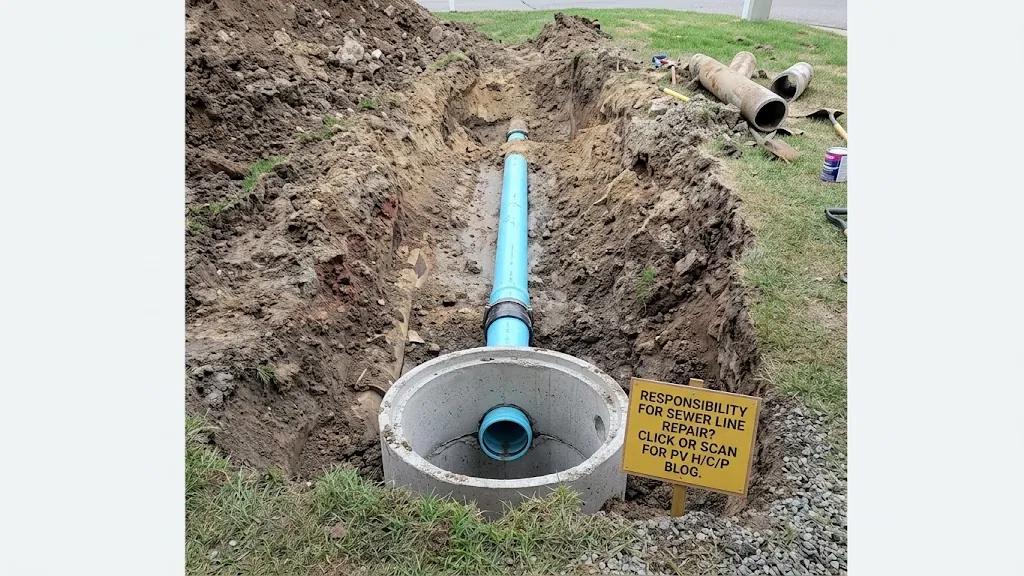
View service →08French Hill's sewer laterals are largely original clay tile, and tree roots plus decades of settling have left plenty of them cracked. We run pipe inspection cameras through the line to find breaks, offsets, and root intrusions. Once we know where the leak is, we can tell you whether it is a spot repair or a full lateral replacement.
View service →09Roof leaks in French Hill's older homes usually show up as ceiling stains after a storm, not during one. We use moisture meters and thermal imaging to trace the water path from the roof deck down through the walls. Most roof leaks we find here start at flashing and chimney penetrations on buildings that have been re-roofed more than once.
View service →Leak detection in Nashua near French Hill starts with a meter check and a walkthrough, because the fastest way to find a leak is to confirm it is real and narrow the zone. In French Hill, that means checking the basement first, since most of these buildings have full basements with visible supply lines and shutoffs. From there we use a FLIR thermal imaging camera to scan walls, floors, and ceilings for temperature anomalies, then switch to acoustic listening devices and ultrasonic leak detectors to hear the leak through the building. On underground lines, we use tracer gas detectors and pressure testing gauges to isolate the break. We schedule around parking on these narrow streets, and we work clean, because most French Hill homes have finished basements and we are not leaving a mess behind. If you need same day leak detection in French Hill Nashua NH, call before noon and we will get a technician out that day.
Many French Hill homes still have original supply piping that has been patched repeatedly. Leaks in these lines are often pinhole failures that only show up under pressure, which makes them hard to find without acoustic and pressure testing tools. We pressure test the supply system first to confirm the leak is on the pressurized side, then use acoustic listening devices to pinpoint the pinhole. We tell you whether the line can be spot-repaired or whether the section needs to be replaced.
A slab leak under a finished basement floor can run for months before anyone notices. By the time the floor feels warm or the bill spikes, water has already damaged flooring and framing. Finding it without tearing up the whole floor is the challenge. We use thermal imaging cameras to map the warm zone, then acoustic listening to confirm the exact break location. We mark the floor so the repair is a small, targeted opening, not a full demolition.
French Hill's dense urban layout means parking is tight, especially near St. Patrick Church and the Lake Street Area. Getting a service truck close to the building affects how fast we can get equipment inside and how long the job takes. We call ahead to confirm parking and access, and we carry the tools we need in a single trip. Most of our leak detection equipment is portable, so we are not blocking the street for long.
All leak detection and repair work in French Hill must be performed by or under the supervision of a licensed plumber. We hold the required state credentials and pull permits when the repair scope requires it. This protects you at resale and with your insurance carrier.
French Hill's multi-family and mixed-use buildings often require backflow prevention assemblies, and leaks in those assemblies can contaminate the supply. We check backflow devices during leak inspections and flag failures before they become a compliance issue.
French Hill's housing stock, soil, and climate create a specific set of leak problems that we see over and over. The neighborhood's dense urban layout and older multi-family homes mean leaks spread fast and affect more than one unit. If you are looking for the best Leak Detection in Nashua French Hill NH, these are the problems we solve most often.
Many French Hill homes were built with copper supply lines running under the slab. After 60 to 80 years, these lines corrode and fail. A finished basement hides the leak until the floor warms up or the bill spikes. We use thermal imaging cameras to map the warm zone, then acoustic listening to confirm the exact break. We mark the floor so the repair is a small opening, not a full tear-out.
French Hill's sewer laterals are largely original clay tile, which cracks with age and settling. Tree roots find the cracks and make them worse. The result is slow drains, sewer smells, and eventually backups. We run pipe inspection cameras through the lateral to find the break and document it on video. Then we tell you whether it is a spot repair or a full replacement, with a price for each.
Some French Hill buildings still have original galvanized supply lines. These lines corrode from the inside, and the first sign is often a leak at a joint or a drop in water pressure. They fail without warning. We pressure test the supply system to confirm the leak, then use acoustic listening to locate it. If the line is too far gone, we tell you and give you a repipe price instead of patching a failing line.
Properties near the Nashua River sit close to the water table, and spring rain pushes hydrostatic pressure against foundation walls. Water finds cracks and cold joints. This is a seasonal problem that gets worse every year. We use moisture meters and thermal imaging to map where the water is entering. Then we recommend drainage or waterproofing that addresses the source, not just the symptom.
French Hill is a dense urban neighborhood, and knowing the landmarks makes the difference between a 30-minute response and an hour of circling. We use St. Patrick Church and French Hill Elementary School as our main orientation points when routing to calls, and we know which streets near the Nashua River flood first after a heavy rain. If you are near Mine Falls Park, tell us which entrance you are closest to and we will route accordingly. Parking is tight on these blocks, so we ask for a heads-up on driveway access or nearby lots when you call.
St. Patrick Church is a central orientation point in the French Hill District. We use it to route to calls on the surrounding blocks, and it helps us confirm which side of the neighborhood a caller is on when street parking makes addresses hard to spot.
French Hill Elementary School anchors the residential blocks on the north side of the neighborhood. Calls near the school are usually residential leak jobs in older multi-family homes, and we plan around school-hour traffic when scheduling.
The Nashua River forms the southern edge of French Hill. Properties close to the river sit nearer the water table, which matters for foundation and basement leak calls. We use the river as a reference when confirming which low-lying blocks a caller is on.
Mine Falls Park sits just west of French Hill and is a useful landmark for routing to the western edge of the neighborhood. If a caller is near the park entrances, we know which streets to take to avoid the busier through-routes.
Central Street carries a mix of small retail, service businesses, and mixed-use buildings with residential units above. The older supply and drain lines in these buildings make them regular candidates for commercial leak detection and after-hours inspections.
The Main Street bridge over the Nashua River is the primary access point between French Hill and downtown Nashua. We use it to route quickly between the two areas when a call comes in on either side.
French Hill is not one uniform neighborhood. The housing stock, water pressure, and drainage issues change block by block, and we work all of it. Below are the areas we cover most often, with the specific leak problems we see in each.
The Lake Street Area has a high concentration of older multi-family homes with original copper supply lines and shared walls. Stacked bathrooms mean a leak on the second floor shows up on the first-floor ceiling fast. We do a lot of hidden pipe leak detection here, usually behind kitchen and bath walls. We are typically on site within 30 to 45 minutes for emergency calls in the Lake Street Area.
Central Street mixes residential buildings with small commercial storefronts, and the sewer laterals here are largely original clay tile. Tree roots and settling have cracked plenty of them. We run pipe inspection cameras through these lines regularly to find breaks before they back up into basements. Central Street is a short drive from our staging point, so we usually arrive within 30 minutes.
The Palm Street Area has a mix of single-family and small multi-family homes, many with basements that sit close to the water table. Spring foundation leaks and basement seepage are common. We use moisture meters and thermal imaging to separate real leaks from condensation and humidity problems. Palm Street calls are typically handled same-day, with emergency response inside 45 minutes.
The core of the French Hill District has the oldest housing stock in the neighborhood, including buildings that predate 1920. Galvanized supply lines, cast iron drains, and original water service lines are all still in service here. These buildings need the full tool kit: acoustic, thermal, and pressure testing. We keep a truck staged near the French Hill District core during business hours for fast response.
These are real jobs we have run in French Hill, with the tools we used and the results we got. They show what leak detection looks like in this neighborhood's older housing stock, and what it takes to find a leak without tearing a building apart.
A Lake Street Area homeowner had a water bill that doubled over two months and a warm spot on the finished basement floor. No visible leak anywhere. We ran a thermal imaging scan of the basement floor and found a concentrated warm zone near the center. Acoustic listening confirmed a slab leak on the hot water line. We marked the location, opened a small section of floor, and repaired the copper line. The leak was repaired in a single visit, the water bill returned to normal the following month, and the homeowner avoided a full basement floor replacement.
A multi-family building near Central Street had a sewer smell in the basement and slow drains on the first floor. The owner suspected a blocked line, not a leak. We ran a pipe inspection camera through the lateral and found a cracked section of original clay tile with root intrusion about 12 feet from the foundation. Pressure testing confirmed the break. We documented the location and recommended a spot repair rather than a full lateral replacement. The spot repair resolved the smell and the slow drains. The owner saved several thousand dollars compared to a full lateral replacement.
A Palm Street Area homeowner noticed a ceiling stain in the first-floor bathroom that kept coming back after painting. The second-floor bathroom above showed no obvious leak. We used moisture meters and thermal imaging to trace the water path from the second-floor shower drain. The leak was at the drain gasket, not the supply lines. We confirmed it with a dye test and repaired the gasket. The ceiling stain stopped returning after the repair, and the homeowner avoided replacing the bathroom floor above.
We had a water bill that jumped and no idea why. They came out the same day, ran a thermal camera over the basement floor, and found a slab leak in about 40 minutes. They marked the spot and repaired it without tearing up the whole floor. Straight answers, fair price, and they cleaned up after themselves.
Called them on a Saturday night when our water heater let go in the basement. They answered the phone, told me how to shut the water off, and had a tech here within the hour. He confirmed the tank was done, gave me a price, and had a new one in the same night. No drama, no upsell.
We had a sewer smell in the basement and slow drains. They ran a camera through the line and found a cracked section of the old clay pipe with roots in it. They showed me the video and explained the repair options clearly. The spot repair fixed it and cost way less than I expected.
French Hill's climate drives leak demand in predictable cycles. Fall and winter bring frozen pipe calls, spring brings basement flooding, and summer is when irrigation and pool leaks show up. Knowing what to expect each season helps you catch problems before they get expensive. If you need 24/7 Leak Detection in Nashua in French Hill NH, we are available year-round.
Spring is basement season in French Hill. Snowmelt and heavy rain push the water table up, and properties near the Nashua River see foundation leaks and seepage. We also find irrigation system leaks when homeowners first charge their zones.
Summer is when irrigation and pool leaks surface. A section of lawn that stays green while the rest dries out usually means an underground irrigation leak. Pool owners notice water loss from cracked return lines and failing light niches.
Fall is the best time to catch hidden leaks before winter. We do a lot of leak detection inspections in October and November, especially on multi-family buildings. Finding a supply line leak now prevents a burst pipe when temperatures drop.
Winter brings frozen pipe calls, especially in French Hill's older homes with unheated basements and exterior walls. A frozen line can split and leak when it thaws. Water heater failures also spike during cold snaps.
French Hill sits on the north side of Nashua, which makes it a natural hub for calls across the city and into the surrounding neighborhoods. We run leak detection in French Hill and the adjacent areas below, often on the same day. If you are just outside these boundaries, call us anyway and we will tell you honestly whether we can get there.
Downtown Nashua is just across the Nashua River from French Hill, a short drive over the Main Street bridge. Many of our commercial leak calls come from this corridor.
Local coverage and details
The North End borders French Hill to the north. We handle residential leak detection here regularly, often on the same day as French Hill calls.
Local coverage and details
Crown Hill is a short drive west of French Hill. The older housing stock here has similar supply line and drain issues, so our tool kit and approach carry over directly.
Local coverage and details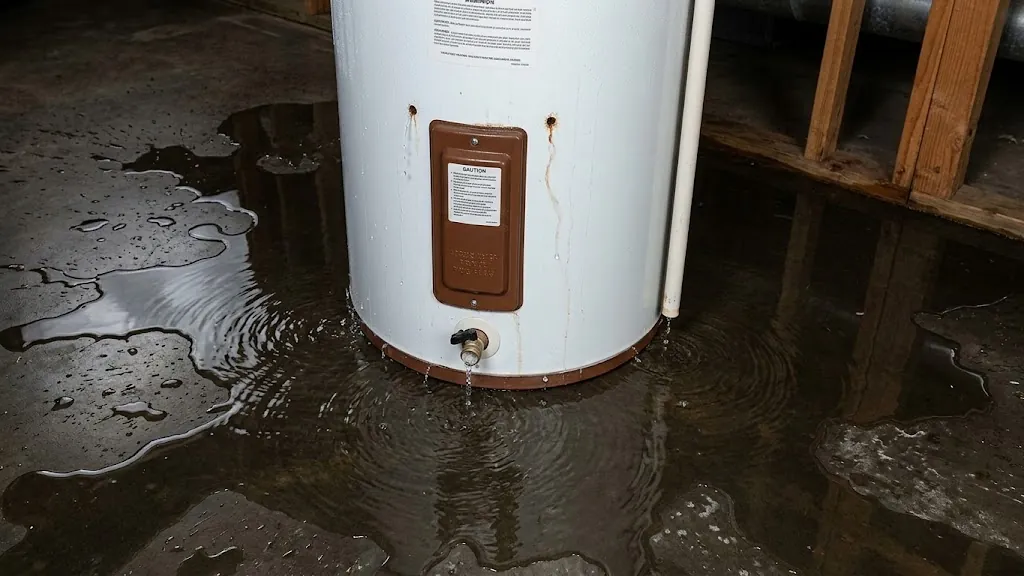
The Tree Streets neighborhood is south of French Hill, across the river. We cover it as part of our core Nashua service area, with the same response times.
Local coverage and detailsNot every leak detection company in French Hill uses the same tools or has the same experience with these buildings. Asking the right questions before you hire saves you money and avoids a second call to fix what the first company missed. Here is what we would ask if we were hiring someone for our own home.
A company that only uses a moisture meter will open more walls than necessary. Thermal imaging, acoustic listening, and tracer gas find leaks with less damage. Ask what they bring to the job.
French Hill's housing stock is old, and the plumbing reflects it. A company that mostly works new construction will struggle with galvanized lines, clay tile laterals, and stacked bathrooms. Experience here matters.
A written report with photos is useful for insurance claims, real estate negotiations, and planning repairs. If a company will not document the leak, you have no proof of what they found or where it was.
Hourly pricing on a leak detection call can get expensive if the leak is hard to find. A fixed price for the detection work protects you. Ask how they price and what is included.
Leak detection often leads to repair work, and repair work requires a licensed plumber in New Hampshire. Ask for the license and insurance details before you let anyone touch your plumbing.
New Hampshire Department of Environmental Services
International Association of Plumbing and Mechanical Officials
Occupational Safety and Health Administration
$2M general liability and full workers compensation
Member
Member
Most residential leak detection calls in French Hill run $180 to $450 in 2026, with the average around $275. The price depends on how hard the leak is to reach and which tools we need. Underground leaks, slab leaks, and gas line work cost more. We give you a price before we start.
The best company is the one that finds the leak without tearing your building apart and documents what it found. We have worked French Hill since 2010 and use thermal imaging, acoustic listening, and tracer gas on every job. Ask any company what tools they use and whether they provide a written report.
Yes. We run emergency leak detection in French Hill 24/7, including nights, weekends, and holidays. Most after-hours calls are burst supply lines, water heater failures, and sewer backups. Call 603 571 4078 and we will tell you how to shut the water off while a technician is on the way.
Start by checking your water meter with everything off. If it is still spinning, you have a leak on a pressurized line. Then call us. We use thermal imaging cameras and acoustic listening devices to find the leak behind walls, under slabs, and underground without opening the building up.
Yes, same-day service is usually available if you call before noon. We keep a truck staged near French Hill during business hours, so response times are short. Emergency calls are dispatched immediately, and standard appointments are typically same-day or next-day.
Not seeing your question? Our local team can help you understand urgency, scheduling and what to expect.
Ask the local team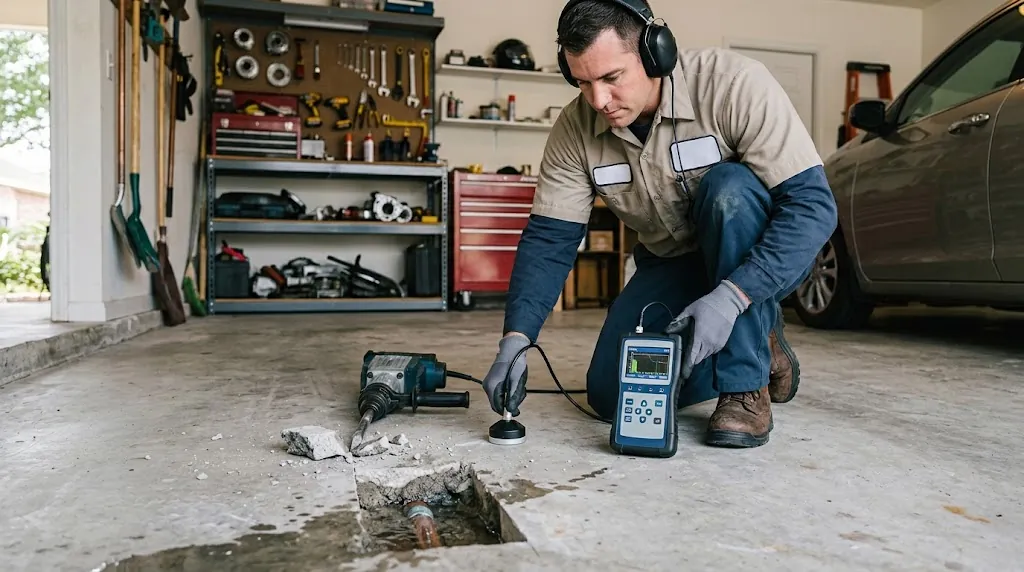
Call 603 571 4078 any hour, day or night, and a real person answers. We schedule same-day appointments for most leak calls in Nashua and the surrounding Hillsborough County area, and we confirm your window before we roll a truck.